#Product Trends
APA-100: A Smarter Path to Lower-Emission Ground Power
The pressure on airports, ground handlers, MROs, and aviation service providers is no longer limited to uptime alone.
Today, the market expects more from every piece of ground support equipment. Customers are being asked to reduce emissions, improve apron efficiency, make better use of limited space, comply with stricter environmental expectations, and still maintain
reliable support for aircraft in daily operations.
This is exactly where the conversation around diesel-powered ground power units has changed.
A Practical Response to the Shift in Ground Power Demands
At ElectroAir, we see the market moving in two directions at the same time. On one hand, the industry is clearly pushing toward cleaner and more sustainable airside operations. On the other hand, many operators still work in environments where fully electric infrastructure is not yet available, not yet scalable, or not yet practical for every operational scenario. That gap between ambition and reality is where smarter equipment choices matter most.
In our view, the future of airport ground operations will not be defined by one single technology alone. It will be shaped by practical transition solutions that help operators improve performance today while preparing for the next stage of infrastructure development.
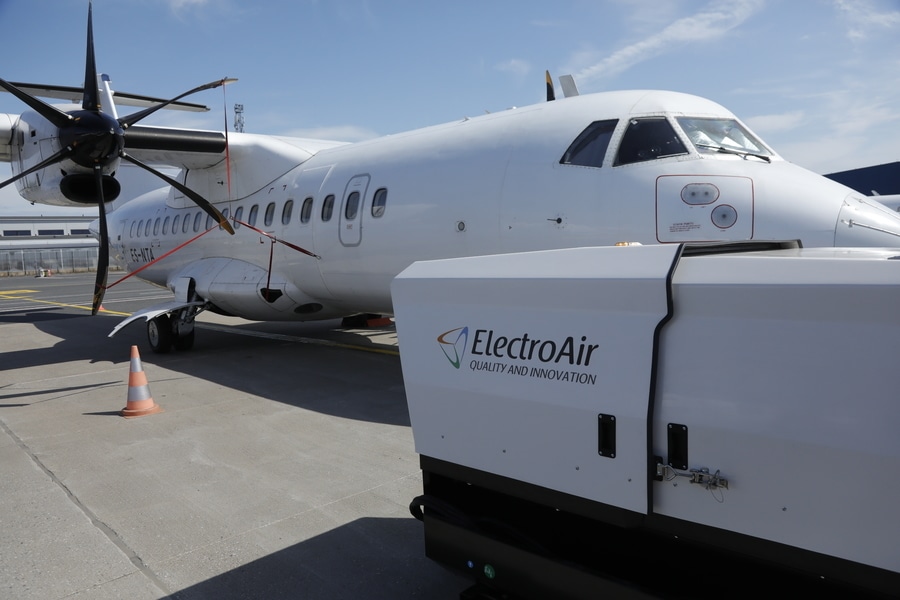
The APA-100 Ground Power Unit is our response to that reality.
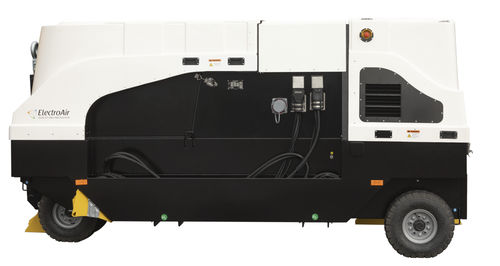
The APA-100 is designed as a compact yet powerful mobile ground power solution that helps customers address several of the most common operational challenges at once. It combines strong output, a relatively smaller body, lower-emission engine technology, and greater flexibility for mixed operational environments. For many customers, that means fewer compromises between performance, space, sustainability expectations, and real-world usability.
Why the Market Is Rethinking Diesel Ground Power Units
For years, diesel-driven GPUs have remained essential across airports, hangars, remote stands, military sites, and line maintenance locations because they offer independence, mobility, and dependable power where fixed infrastructure is limited or unavailable. That has not changed.
What has changed is the level of scrutiny around emissions, efficiency, and long-term suitability.
Airport operators are under growing pressure to support wider sustainability goals. Ground handling companies are increasingly expected to modernize fleets without disrupting operations. MROs need equipment that fits into tighter working areas while still delivering reliable power for different aircraft service scenarios. Procurement teams are also evaluating equipment not only on output, but on regulatory fit, operating practicality, and future relevance.
In this environment, older diesel concepts begin to show their limitations. Large, heavy units can be difficult to position in constrained apron space. Higher-emission engine platforms can become harder to justify in modern procurement conversations. Units that deliver power but create unnecessary operational inefficiencies no longer meet the broader expectations of the market.
That is why a product like the ElectroAir APA-100 is important. It is not simply a powerful GPU. It represents a more balanced answer to what operators now need from airside equipment.
Lower Emissions Matter, Even Before Full Electrification
One of the biggest shifts in the industry is that emissions are no longer treated as a secondary topic. They are becoming part of everyday decision-making.
At ElectroAir, we believe the conversation should be honest. Not every airport, ground handler, or maintenance operator is in a position to move fully electric right now. Infrastructure limitations, capital planning cycles, charging strategy, duty cycles, climate conditions, and mixed fleet requirements all play a role. For many customers, diesel-powered equipment is still operationally necessary. But that does not mean they should be forced to choose between operational necessity and environmental responsibility.
The APA-100 addresses this challenge by using a Stage V / Tier 4 Final diesel engine, helping customers move toward lower-emission operation compared with older engine generations. This matters because many operators are trying to reduce the environmental impact of ground activities even before full electrification becomes realistic across their whole operation. In practical terms, lower emissions help customers respond to several pressures at once. They can better align with internal environmental targets. They can support broader airport sustainability strategies. They can improve the positioning of their fleet in tenders and regulated procurement environments. And they can show that even when diesel remains part of the operation, it is not based on outdated engine technology.
This is an important point in today’s market. Transition does not only happen when everything becomes electric overnight. Transition also happens when operators choose more responsible equipment now.
Better Alignment With Airport Sustainability Goals
Sustainability in aviation is often discussed broadly, but on the ground, it becomes highly practical. Airports are paying closer attention to emissions and operational efficiency across the apron, gates, maintenance areas, and remote stands, and ground support equipment is part of that equation.
The APA-100 supports this shift by combining lower-emission operation with the mobility and power output many customers still need. A major advantage is that we offer it not only as a diesel-driven unit, but also as a plug-in hybrid version. For customers working toward stronger sustainability goals, this creates a more practical path forward, allowing the unit to use utility power where available, reduce fuel consumption, and support cleaner day-to-day apron operations.
Stronger Fit for Regulated Markets
Compliance and regulatory fit are playing a bigger role in equipment selection, especially for companies serving international airports and more demanding procurement environments. In our view, this is one of the clearest shifts in the market: customers are no longer buying only for today’s operational need, but for long-term relevance in an environment that continues to change.
The APA-100 is designed with that in mind. Built around a lower-emission engine platform and available with optional hybrid utility power plug-in functionality, it offers a stronger fit for markets where compliance, modernization, and future readiness matter.
A More Future-Conscious Diesel Option
The future of ground power is rarely a simple choice between traditional diesel and full electrification. In our view, many operators need a practical bridge between current operational realities and future sustainability goals. That is where the ElectroAir APA-100 stands out.
We see it as a more future-conscious diesel option for customers who are not ready to move fully electric yet, but still want to invest responsibly. It reflects a more practical path forward: supporting today’s operational needs while aligning more closely with the direction the industry is moving.
Compact Body, Powerful Engine, Real Operational Value
One of the most practical strengths of the APA-100 is its ability to combine a smaller body with a powerful engine and strong output capability. This matters more than it may seem at first glance.
Airside environments are crowded. Apron space is limited. Positioning equipment around aircraft often involves time pressure, spatial constraints, safety considerations, and the need to avoid unnecessary clutter. In maintenance and line service environments, equipment footprint can directly affect workflow efficiency.
The compact mobile unit helps customers save valuable apron and hangar space, improve. maneuverability in tighter operational areas, reduce unnecessary equipment bulk around aircraft, and maintain strong output without moving to a larger footprint. At the same time, optional hybrid utility power plug-in functionality, two aircraft power types in one unit, and suitability for mixed-fleet operations make it a more practical and commercially relevant solution for customers who need flexibility as well as performance. With reliable operation in harsh outdoor conditions and strong overload capability, it is built not just for specification
sheets, but for the realities of demanding daily use.
From our point of view, this is one of the most underrated aspects of good ground power design. Customers do not only need power. They need power that fits the reality of the working environment. That is why the APA-100 is not just about output figures. It is about usable performance.
Our View on the Future of the Industry
At ElectroAir, we believe the future of the aviation ground support industry will be shaped by three major forces.
The first is decarbonization pressure. Airports and aviation service providers will continue seeking cleaner operations, whether through electrification, hybrid concepts, smarter infrastructure planning, or lower-emission transitional equipment.
The second is space and efficiency pressure. Apron areas will not become less demanding.
Operational intensity, turnaround expectations, and space limitations will continue to make
compact, practical equipment design more valuable.
The third is flexibility pressure. Operators will need solutions that can perform well across different service scenarios, infrastructure conditions, and procurement expectations.
Products that succeed in this future will be the ones that understand complexity instead of
ignoring it.