#Industry News
Advantages of de-icing vehicles
Advantages of de-icing vehicles
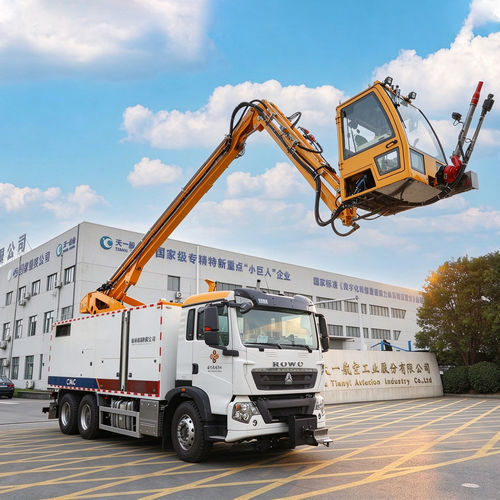
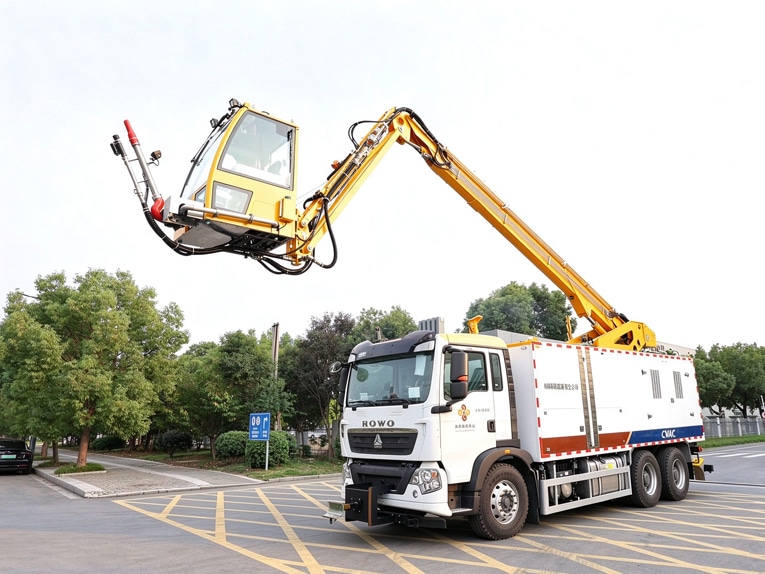
De-icing vehicle mainly for aircraft de-icing operations, this type of de-icing vehicle is a hot type, de-icing any commercial aircraft in service, including military aircraft.
De-icing vehicle has the following advantages
1. Flow rate: High flow rate: The de-icing vehicle of JSTY9600I aircraft can achieve a de-icing flow rate of 230L/min and an anti-icing flow rate of 100L/min.
Precise flow control: Through the intelligent control system, operators can adjust the spray gun flow rate to meet different de-icing requirements.
2. Range: Long-range spraying: The de-icing vehicle of JSTY9600I aircraft uses imported spray guns from abroad. The de-icing operation range can reach 30m, and the anti-icing operation range can reach 27m. The de-icing liquid and anti-icing liquid are sprayed onto the key parts of the aircraft such as the fuselage, wings and tail, covering a wide area.
3. Stress structural strength: High-strength material application: The main body of the arm of the JSTY9600I de-icing vehicle is made of high-strength structural steel, with a lifting height of up to 14.7m and a maximum operation range of 12m. The design structural stress safety factor reaches 3.52, which is much greater than the safety factor of >2.0 for high-altitude operation components, meeting the requirements of GB/T9465-2008.
4. Wind resistance stability: Wind resistance design: By optimizing the distribution of the vehicle's center of gravity, the JSTY9600I de-icing vehicle reduces the impact of wind on the operation and improves its wind resistance stability. When the sample vehicle is parked (wind speed is 120km/h), the safety factor for overturning is at least 4.44, and when the vehicle is in operation (wind speed is 75km/h), the safety factor for overturning is at least 6.31.
5. Heating time: Instant heating system: This system of the JSTY9600I de-icing vehicle will raise the temperature of the liquid from the normal environmental storage temperature to 85ºC. The heating time is less than 3 minutes, and it has the ability to quickly heat up.
6. Liquid tank: Large capacity design: The liquid tank of the JSTY9600I de-icing vehicle has a large capacity. The de-icing liquid tank can reach 7800L, and the anti-icing liquid tank can reach 1800L. This can reduce the frequency of refilling and improve overall efficiency.
Water level monitoring: The external box can monitor the water volume in real time, and plan in advance to prevent operation stagnation due to lack of water.
Flow rate monitoring: Flow rate monitoring can be conducted in the driver's cabin and the cabin compartment to ensure that the de-icing liquid evenly covers the aircraft surface and avoids insufficient spraying in some areas, resulting in residual ice layers.
7. Stability: Chassis bearing: The JSTY9600I de-icing vehicle uses the chassis of Sinotruk, with a 6X4 drive form, a large-displacement diesel engine, sufficient torque output, strong bearing capacity, and high stability.
8. Operability: Operability: The handrail box in the enclosed cabin of the JSTY9600I de-icing vehicle is the core control area for de-icing operations. The left trigger is used to control the lifting, rotation, and horizontal adjustment of the arm and cabin. The right trigger controls the spray gun. The operation is simple and the safety performance is high.
9. Emergency protection: Emergency protection: (1) The external box is equipped with an emergency stop button, which can immediately terminate all operation actions in case of emergencies (such as arm失控, de-icing liquid leakage), ensuring the safety of personnel and equipment. (2) A manual emergency hydraulic pump is equipped to prevent the indoor operator from being lifted during the operation and encountering faults in the auxiliary engine or hydraulic pump, and in case of emergency situations, the main arm, small arm and cabin can be operated on the ground.
10. Driver's cabin: Water heating system (water heating bag): The JSTY9600I de-icing vehicle is equipped with an independent heating system, which can cope with low-temperature environments (-40°C), is energy-efficient and comfortable and safe.
11. Chassis: Transmission: Allison AG transmission is used, with high power, real-time monitoring, capable of diagnosing the transmission status, smooth driving, and reducing maintenance costs.
Low-speed stable driving: The minimum stable driving speed can reach 2.7km/h.