

#Industry News
A new MRO equation reshapes aviation resilience
Balancing cost, availability, and sustainability is the new foundation of MRO performance.
fficiency is no longer the sole metric for success, and cost control alone cannot absorb the pressure. Circularity has moved from the margins to the centre, reshaping how decisions are made.
This shift is redefining the rules. What used to be a question of optimisation has become a question of balance.
In 2026, operators are no longer optimising within stable conditions. They are managing cost, availability, and sustainability simultaneously in an environment defined by volatility, constrained supply, and rising regulatory expectations.
From optimisation to orchestration
The post-pandemic environment has fundamentally reshaped maintenance decision-making.
Cost and availability remain critical, but ESG considerations are now embedded into procurement, operations, and reporting. This creates a three-way balancing act where every decision carries consequences across multiple dimensions.
When cost becomes unpredictable, planning breaks down. And when planning breaks down, operational risk increases across the entire network.
At the same time, supply-chain volatility continues to disrupt planning. Rising costs, from labour and materials to logistics and energy, are placing sustained pressure on margins. Yet the greater challenge is not just cost itself, but cost unpredictability.
In this environment, maintenance is evolving from a transactional function into a coordinated supply-chain discipline. The focus is shifting from optimisation of individual variables to orchestration of the entire system.
Explore how these structural shifts are reshaping MRO strategies in the full Satair Industry Report.
Availability becomes the defining constraint
If cost is the pressure, availability is the bottleneck.
Material shortages have emerged as one of the industry’s most critical disruptors, with parts availability now directly influencing turnaround times, fleet utilisation, and operational reliability. Lead times for key components have expanded significantly, in some cases doubling or even tripling compared to pre-pandemic norms.
This has forced operators to rethink traditional sourcing strategies. Exchange pools, part loans, and alternative supply channels are now becoming core elements of maintenance planning.
In this new environment, availability is becoming a strategic differentiator between those who can keep aircraft flying and those who cannot.
The implication is clear. Availability cannot be taken for granted. It must be actively engineered through smarter planning, diversified sourcing, and closer supplier collaboration.
Cost control shifts to cost predictability
Cost remains a central concern, but its role is changing.
In a volatile environment, the priority is no longer simply reducing spend. It is stabilising it. Unexpected cost spikes, driven by delays, shortages, or unplanned maintenance events, create far greater operational risk than predictable, managed expenditure.
The lowest-cost option is not always the most effective. Increasingly, value is defined by reliability, consistency, and the ability to plan with confidence.
This is why the industry is moving toward long-term supply agreements, integrated planning frameworks, and data-driven forecasting. These approaches provide greater visibility and control, enabling operators to anticipate demand, secure material flow, and protect margins.
Sustainability becomes operational
Sustainability has transitioned from aspiration to obligation throughout the entire industry. This transition is structural, not temporary.
Regulatory frameworks, customer expectations, and investor scrutiny are driving the need for measurable ESG performance. Transparency is now essential, with digital traceability systems enabling operators to track material provenance, life cycle emissions, and sustainability metrics across the supply chain.
This shift is influencing core maintenance decisions. Repair is being prioritised over replacement. Life cycle thinking is replacing short-term cost calculations. And sustainability metrics are becoming embedded in supplier selection and operational planning.
ESG is now a parallel consideration. It is a defining factor in how maintenance strategies are designed and executed.
Circularity and USM move into the mainstream
The rise of circular maintenance models illustrates how the industry is aligning cost, availability, and sustainability.
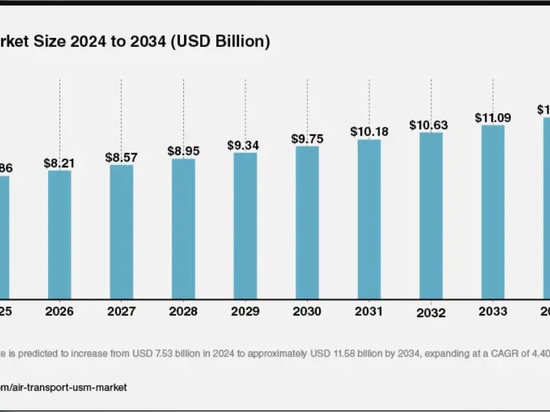
Used Serviceable Material (USM), once primarily a cost-saving option, is now delivering value across all three dimensions. USM offers faster availability in constrained markets, lower acquisition costs, and reduced environmental impact compared to new parts.
This convergence is what makes USM powerful. It is one of the few levers that improves cost, availability, and sustainability at the same time.
As digital certification and traceability improve, confidence in USM components continues to grow. This is enabling operators to scale their use and integrate them into long-term maintenance strategies.
Circularity is becoming a practical and scalable solution to some of the industry’s most pressing challenges by improving parts availability, stabilising costs, and supporting sustainability goals.